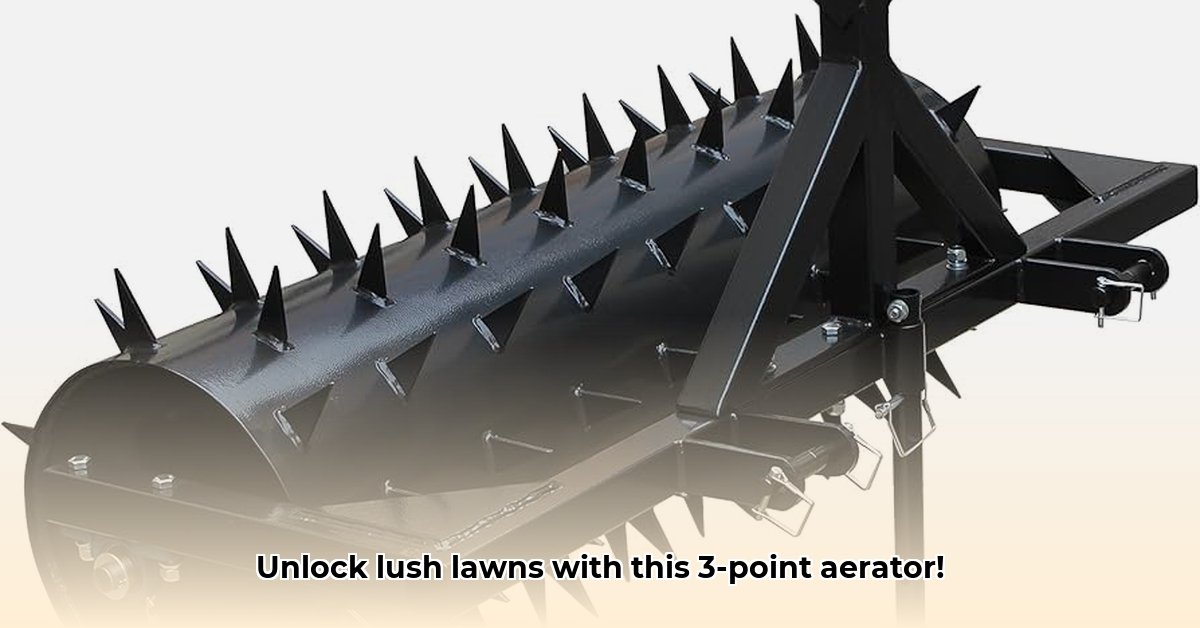
Understanding Aeration: The Key to a Thriving Lawn
Aeration is crucial for a healthy lawn. Compacted soil restricts water and nutrient flow to grass roots, leading to a weak, stressed lawn susceptible to disease and drought. A 3-point tractor aerator is the ideal solution for efficiently aerating larger areas, improving soil health, and fostering a more sustainable lawn care approach. This guide provides a comprehensive understanding of choosing, operating, and maintaining this powerful tool. For more information on 3-point tractor aerators, check out this helpful resource.
Choosing the Right 3-Point Tractor Aerator: Factors to Consider
Selecting the right 3-point tractor aerator requires careful consideration of several key factors. The wrong choice can lead to inefficient aeration or even damage to your lawn and equipment. Here's a breakdown to guide your decision:
Tine Type and Spacing: Core vs. Solid Tine
Core Aeration: Removes small plugs of soil, creating larger holes ideal for thatch removal and improved drainage. This method excels on lawns with heavy thatch buildup, improving both air and water permeability.
Solid-Tine Aeration: Punctures the soil without removing plugs, mainly addressing compaction in heavy clay soils. This method is excellent for breaking up hard soil but won't remove thatch effectively.
Tine spacing directly impacts coverage. Closer spacing provides more holes, potentially leading to better aeration but requiring more passes. Consider your soil type and thatch levels when making this choice. Do you have a lot of thatch? Core aeration is better. Is compaction your main concern? Solid-tine will be more suitable.
Working Width, Depth, and Weight Considerations
Working Width: The wider the aerator, the faster the coverage, but maneuverability may decrease in tighter spaces. Choose a width compatible with your tractor and lawn size.
Depth of Penetration: This depends on your soil type and compaction level. Heavier aerators, and the addition of ballast weights, achieve deeper penetration but may put more strain on your tractor. Excessive depth can damage the lawn.
Weight and Ballast Options: Heavier aerators provide better penetration, particularly in compacted soils. Ballast allows increased penetration without stressing your tractor excessively. It's highly recommended for heavier clay soils. However, lighter aerators are suitable for sandy soil types.
Hitch Type, Power Requirements, and Durability
Hitch Type: Ensure compatibility with your tractor's 3-point hitch system. A quick-hitch system significantly reduces setup and changeover time.
Engine Power Requirements: Match the aerator's power demands to your tractor's capabilities to prevent overloading or damaging the tractor. Check both the aerator and tractor manuals for compatibility.
Durability and Maintenance: Invest in a robustly built aerator with easily accessible parts for maintenance. A well-maintained aerator will provide years of reliable service. Regular maintenance is paramount to maximize the lifespan and reliability of the aerator.
Price Point: Balancing Value and Investment
Consider the total cost of ownership. While a higher initial price may be a factor, a well-built, long-lasting aerator can prove more cost-effective in the long run compared to a cheaper option that might require earlier replacement. Does the aerator's construction quality justify its cost? How does its lifespan factor into its value proposition?
Operating Your 3-Point Tractor Aerator: A Step-by-Step Guide
Proper operation ensures effective aeration and prevents damage. Follow these steps:
Pre-Operation Checks: Inspect the aerator for damage, check fluid levels, and ensure your tractor is in good working order.
Attachment and Adjustment: Connect the aerator to your tractor's 3-point hitch, following the manufacturer's instructions meticulously. Adjust tine depth according to your soil's characteristics.
Optimal Operating Speed and Depth: Maintain a consistent operating speed and depth to ensure even aeration. Overlapping passes prevent missed areas.
Safe Operating Practices: Wear appropriate personal protective equipment (PPE), including eye and ear protection, and sturdy footwear. Be aware of your surroundings and ensure the area is clear of obstacles.
Post-Operation Maintenance: Clean the aerator thoroughly to remove soil and debris. Lubricate moving parts as needed and store the aerator properly to protect it from the elements.
Maintenance and Storage: Protecting Your Investment
Regular maintenance is key for the longevity of your aerator. Clean it thoroughly after each use, lubricating any moving parts as recommended by the manufacturer. Store it in a dry, protected location away from the elements. Addressing minor issues promptly prevents them from escalating into major problems. Proactive maintenance is far more cost-effective than dealing with major repairs.
Case Study: Real-World Results
A farmer in Iowa using a 3-point aerator on heavy clay soil reported a 20% increase in water infiltration after just one aeration pass. This resulted in significant water savings and improved crop yields.
Conclusion: Reap the Rewards of Healthy Soil
Investing in a 3-point tractor aerator provides a substantial return on investment in the form of a healthier, more resilient lawn. By following this guide, you can optimize your aeration process, maximizing the benefits for your lawn's long-term health and sustainability. Remember, a healthy lawn starts with healthy soil!